

Words and tools
On language and belonging.

The best parody is the kind that feels a little too real. An ad that recently popped up on my LinkedIn feed—a spoof horror movie about a family haunted by enterprise software—nailed that feeling. It’s funny because it’s true: B2B (business-to-business) marketing can be terrifyingly complex (and that was before ChatGPT started churning out agents and slop). Everything is over-explained, over-acronymed, and trapped in its own terminology (B2B2C, anyone?).
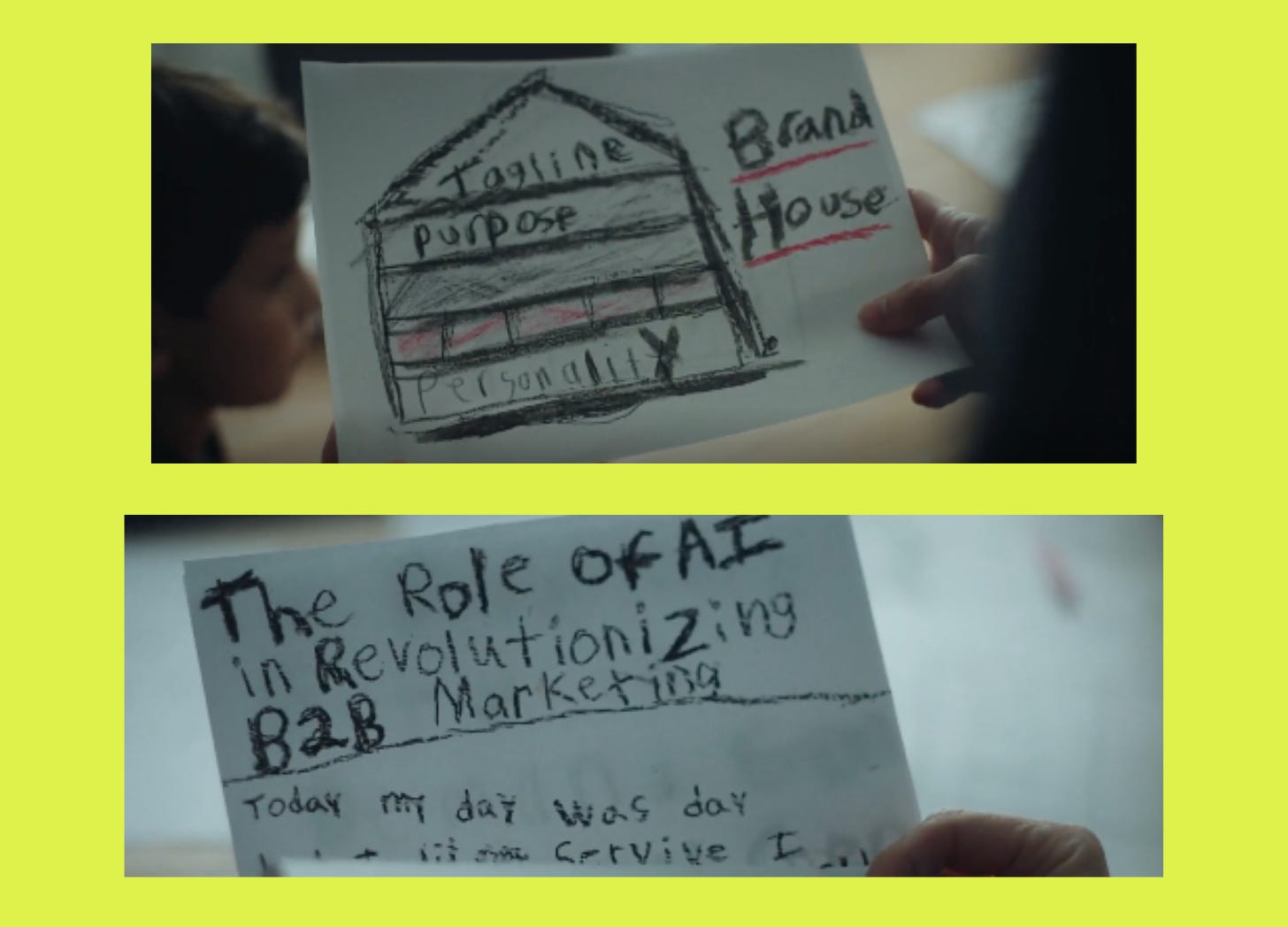
Source: Umault via LinkedIn. Not gonna lie, these screenshots are a bit reminiscent of my Substack drafts folder.What’s stuck with me isn’t the ad: it’s what it’s saying about language and the way that seemingly every industry, community, and subculture has a dialect that defines it.
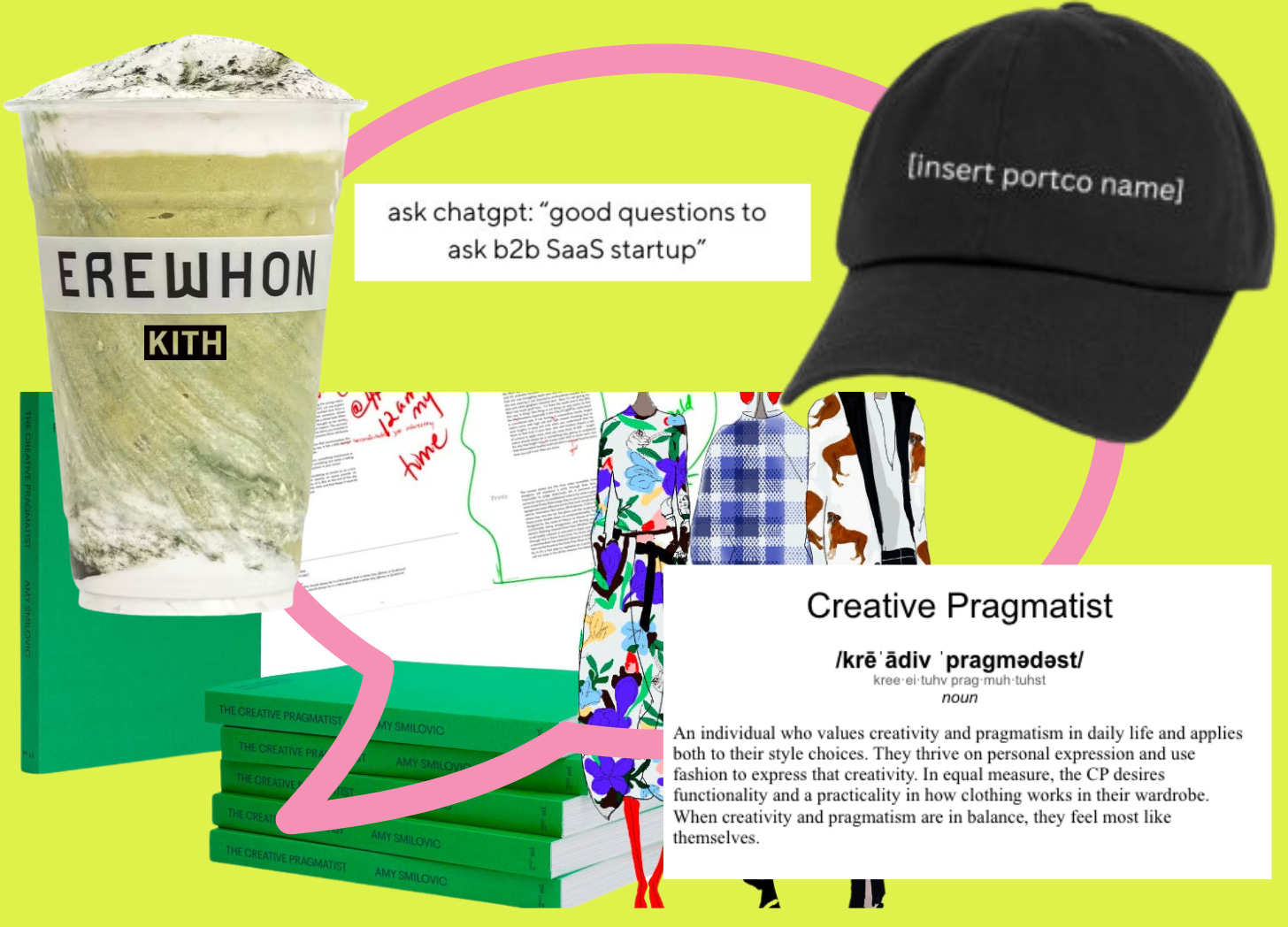
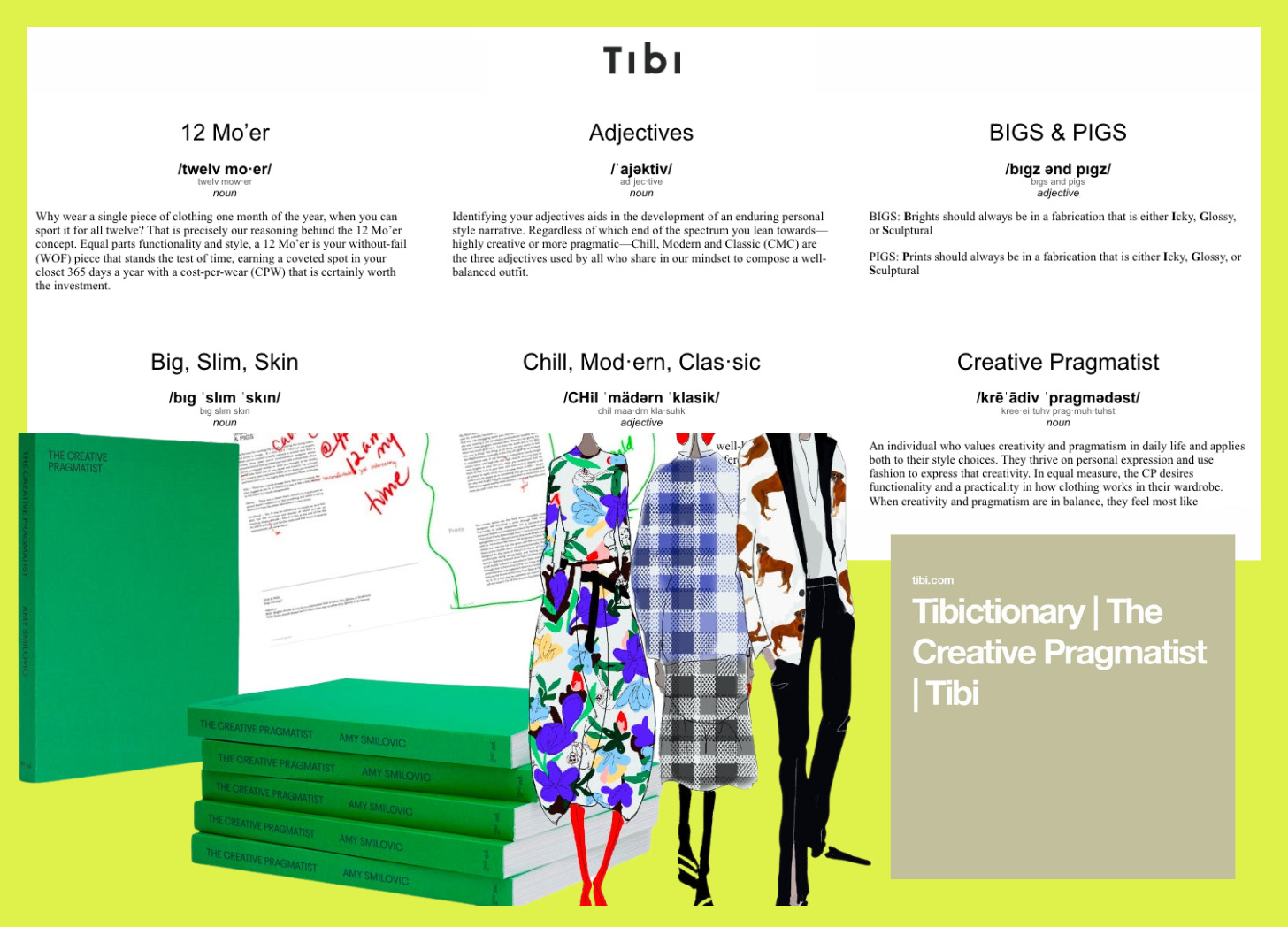
There’s the language of identity, where vocabulary doubles as a worldview. Amy Smilovic’s creative pragmatism isn’t just a design philosophy. Acronyms like PDW — Play, Dinner, Work — act as shorthand for a way of living and self-actualization, not just dressing (which is why my recent Birthday Pants purchase was about so much more than a snap-up inseam—it felt like an exhalation: this is 37).
Source: TibiThen there’s the language of exclusivity, meant to signal taste and access. Soho House, Erewhon, Kith (interestingly, the latter two are bringing us a forthcoming collab in NYC). It’s not just a smoothie; it’s proximity — to the kind of people who know what “adaptogenic” means and care that you do, too.

Source: KithAnd then there’s the language of complexity, the one used to prove technical mastery. Venture capital, where I work, for example, is fluent in this. No one just says “marketing”; they say “platform.” You don’t work with startups; you work with portfolio companies.
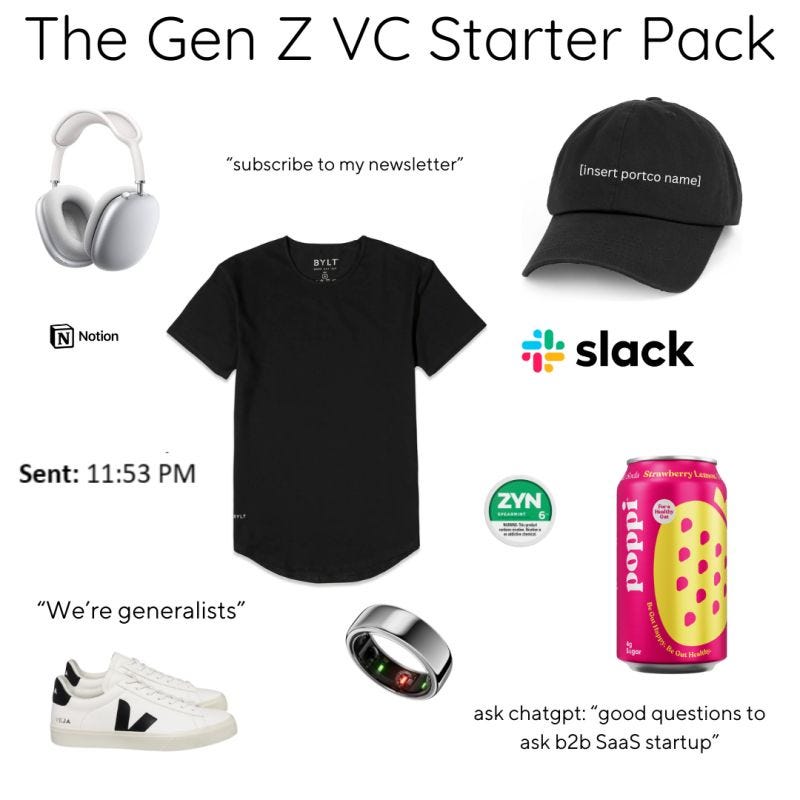
Source: Soapbox. LOL at “subscribe to my newsletter.”Part of the question, for both brands and people, is: what kind of voice do you want to have? And how do you wield your language? Are you winking at the absurdity? Are you helping someone make sense of it? Are you code-switching between several dialects?
Going back to Tibi, what I appreciate about their approach is that they’re building a shared vocabulary that simplifies the act of getting dressed. It’s language as utility: you don’t have to decode the aesthetic; they give you the words to participate in it.
Now that I’ve said all of that, I’m off to go email some portcos about their B2B campaigns. Hope everyone’s holidays are off to a good start!
Great read, Claire.
Where does the use of "family" in the workplace fit in? One of my favorite corporate-Americanisms.
This is where I'd add in the Language of Humanity (or Authenticity...take your pick).
In the case of calling our corporate co-workers "family", the Language of Humanity serves as a counterweight to the other languages and expressions - to reduce complexity (or at least create a veil of simplicity), make everything feel more real, until we ask Perplexity to define what Language of Humanity means to us (using discretion here and not searching.... ha!)